

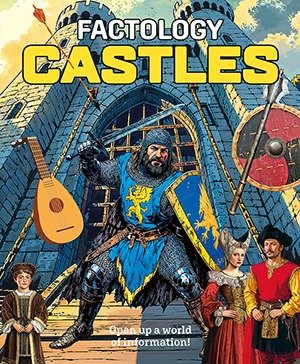
Button books ISBN: 978-1-78708-190-1 £12.99
www.buttonbooks.co.uk
Whilst the term castle would normally bring to mind moats, drawbridges, portcullis and ramparts of the classic stone period from medieval times the need to protect ourselves has been around since humans transitioned from being nomadic hunters to a farming based existence. Forts and hilltop earthworks were the forerunners of what we would expect a castle to look like, but as warfare evolved these each became obsolete.
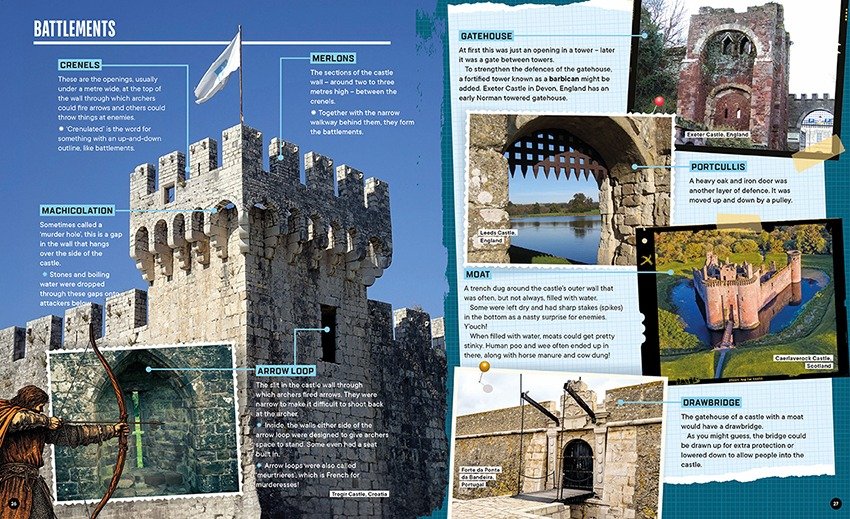
This colourful addition to the Factology series looks at the whole period of fortification but concentrates on the classic period until castle building was discontinued due to the advancement of artillery. Many classic examples are included from across Europe and we see Colditz still being used in WWII. Although the usual mass of graphics and facts are included we see more photographs this time around.
We get myth throw into this with the Arthurian legend although there would be no classic syle buildings from the actual time that he would have lived. There are also sections not about the castles but on the clothes, pastimes and diet during this period.
One of the more interesting elements of the book is how it explains just how many people were needed to operate such a large building and this includes cooks, carpenters, trenchermen, coopers and blacksmiths to name a few, and pity the poor gong farmer and especially the tale of ‘Richard the raker’ from 1325.
One misconception was that they had dungeons, but this was rare and we do see whole castles converted into prisons many centuries later.
Germany has some 25,000 castles which shows the turbulence of Europe during the middle ages. Although stone forts were built by the Romans here in the UK it was the Normans who kickstarted the classic period. Some fine surviving examples across Europe are shown here and it looks like a new one will soon join the list as enthusiasts are building their own project in Burgundy.
Like all the Factology series there is a glossary but this time round there is no Big Quiz. Aimed at the 8+ year old group this encapsulates Medieval life into one building.